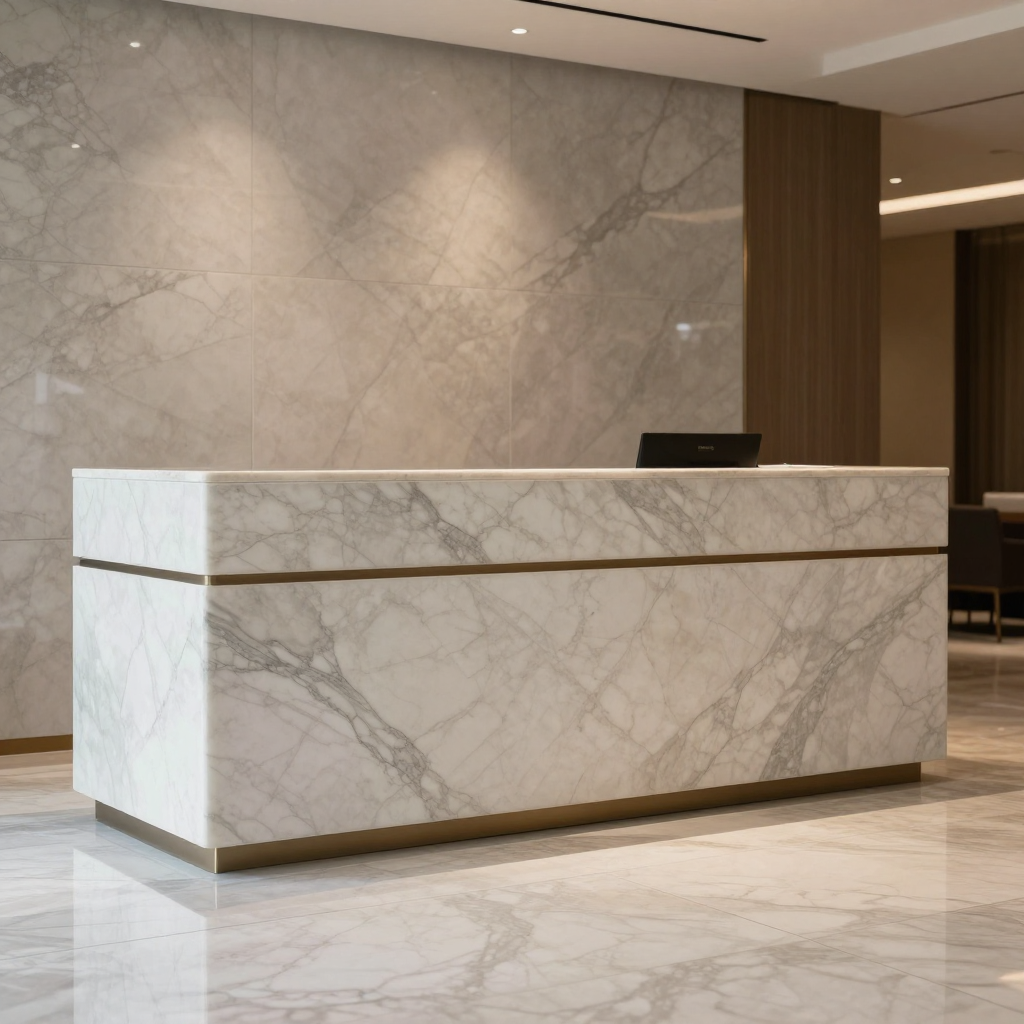
The Classic
Polishing brings the stone surface through progressive grinding stages — from 50 grit through to 3000+ grit — until a mirror-bright reflective finish is achieved. The result is the stone's maximum colour saturation and the full depth of its natural veining. Polished stone closes the surface pores partially, improving water and stain resistance relative to honed, while delivering the visual impact most commonly associated with luxury stone interiors.
Performance Ratings
Process
Suitable Stones
Ideal Applications
Not recommended: Outdoor wet floors, heavy-traffic areas without slip treatment
Refined Matte
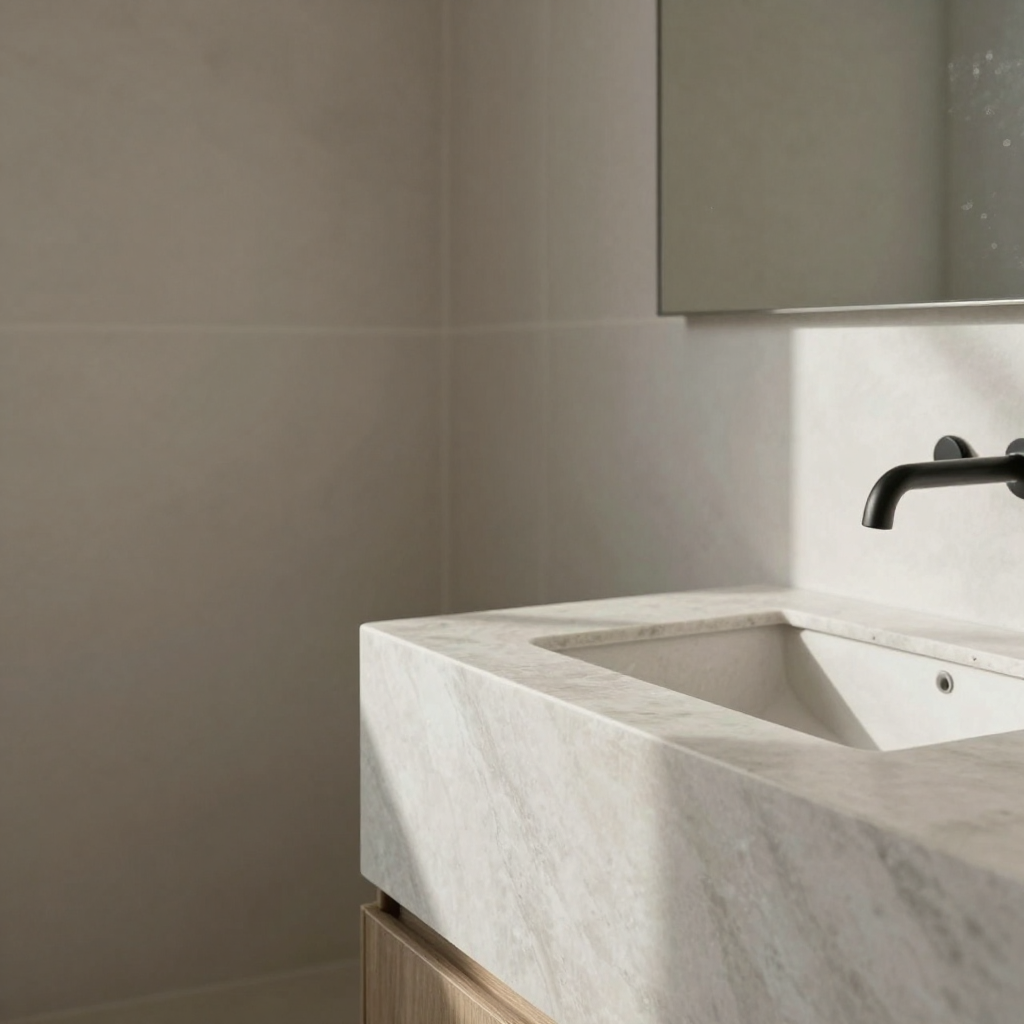
Honing intentionally stops the grinding process before gloss forms — typically at 400 to 800 grit — leaving a perfectly smooth surface without any reflective sheen. The result is a sophisticated, velvety matte finish that is softer in appearance and significantly more forgiving of water marks, fingerprints, and daily wear. The stone's natural colour remains vivid, often appearing slightly deeper and richer than the polished equivalent. Currently the dominant finish preference in contemporary European commercial and residential architecture.
Performance Ratings
Process
Suitable Stones
Ideal Applications
Not recommended: Pool surrounds, exposed exterior in wet climates
Textured Anti-Slip
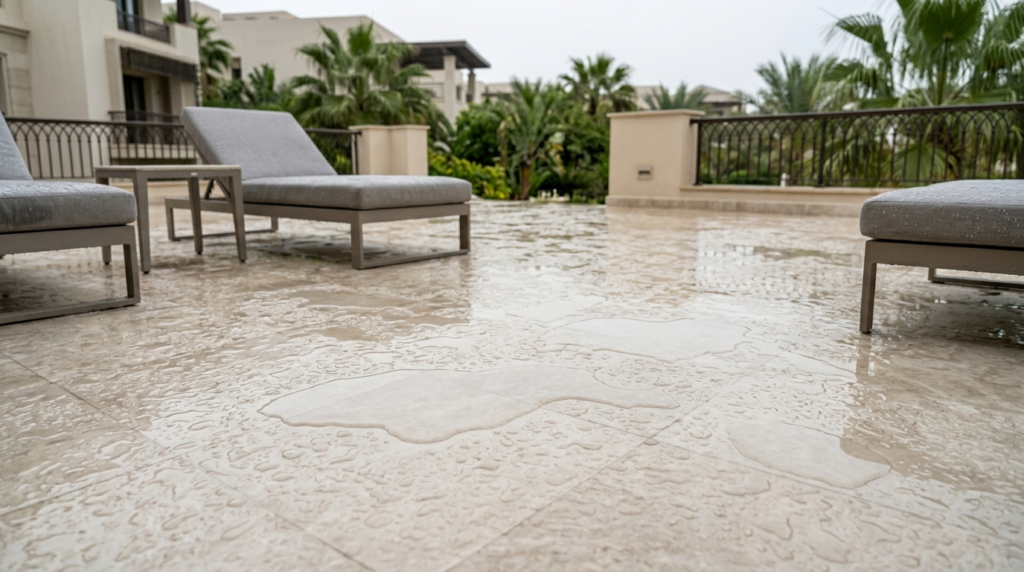
Sandblasting propels high-velocity silica sand or aluminium oxide particles at the stone surface under compressed air at 2–4 bar. The abrasion removes the polished surface layer and erodes softer mineral grains, leaving the harder minerals to form a uniformly rough, low-sheen texture with excellent grip. The finish opens surface pores, requiring professional sealing for outdoor installation. Sandblasting is the standard anti-slip finish for outdoor paving, pool surrounds, and public steps where DIN slip resistance compliance is required.
Performance Ratings
Process
Suitable Stones
Ideal Applications
Not recommended: Interior polished wall surfaces, fragile or thin-section stones
Industrial Texture
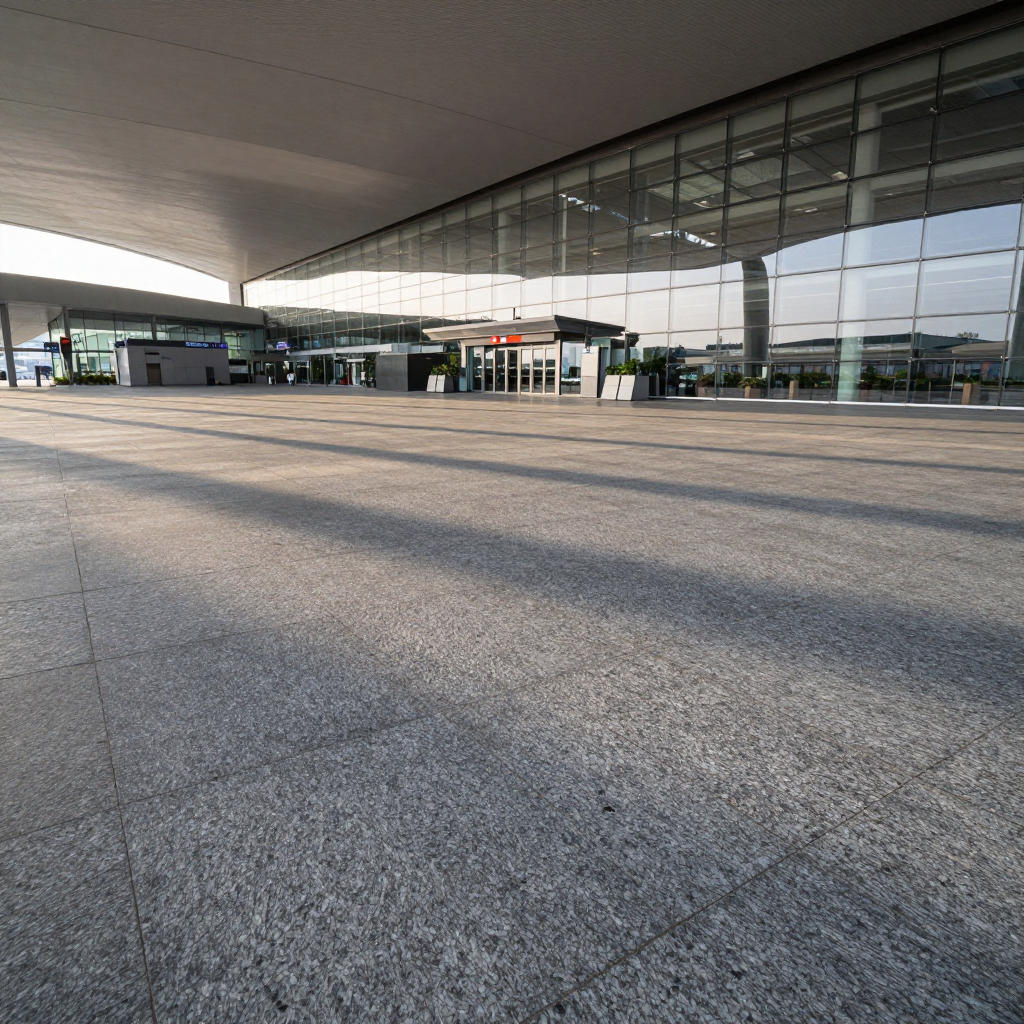
A multi-headed pneumatic hammer fitted with pyramid-tipped tungsten carbide creates a regular grid of deep dimple impacts across the stone surface. The mechanical impact fractures the surface crystalline structure, producing a dramatically textured surface with the highest slip resistance of any standard stone finish. The technique is ideal for harder stones — granite and basalt — and is the specification of choice for bridge decks, public plazas, and infrastructure paving where maximum anti-slip performance is a regulatory requirement.
Performance Ratings
Process
Suitable Stones
Ideal Applications
Not recommended: Marble and limestone (thermal stress risk) — granite and basalt only for best results
Aged Elegance
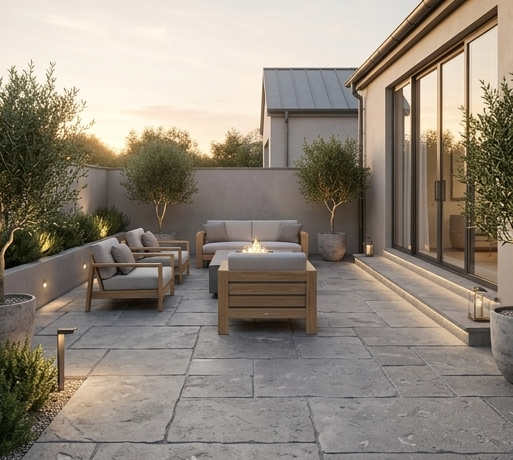
Wire brushing uses high-speed rotating steel or silicon carbide brushes to selectively erode the softer calcite minerals while leaving harder crystal grains intact. The result is a subtle, directional surface texture — softer than sandblasting, more refined than bush-hammering — with micro-relief that catches light and creates a pleasingly handcrafted quality. Travertine and limestone respond particularly beautifully to brushing, developing a surface that reads as naturally aged without appearing artificially distressed. The finish is well suited to both indoor and covered outdoor residential applications.
Performance Ratings
Process
Suitable Stones
Ideal Applications
Not recommended: Highly polished showcase surfaces, stones with very tight grain
Timeless Heritage
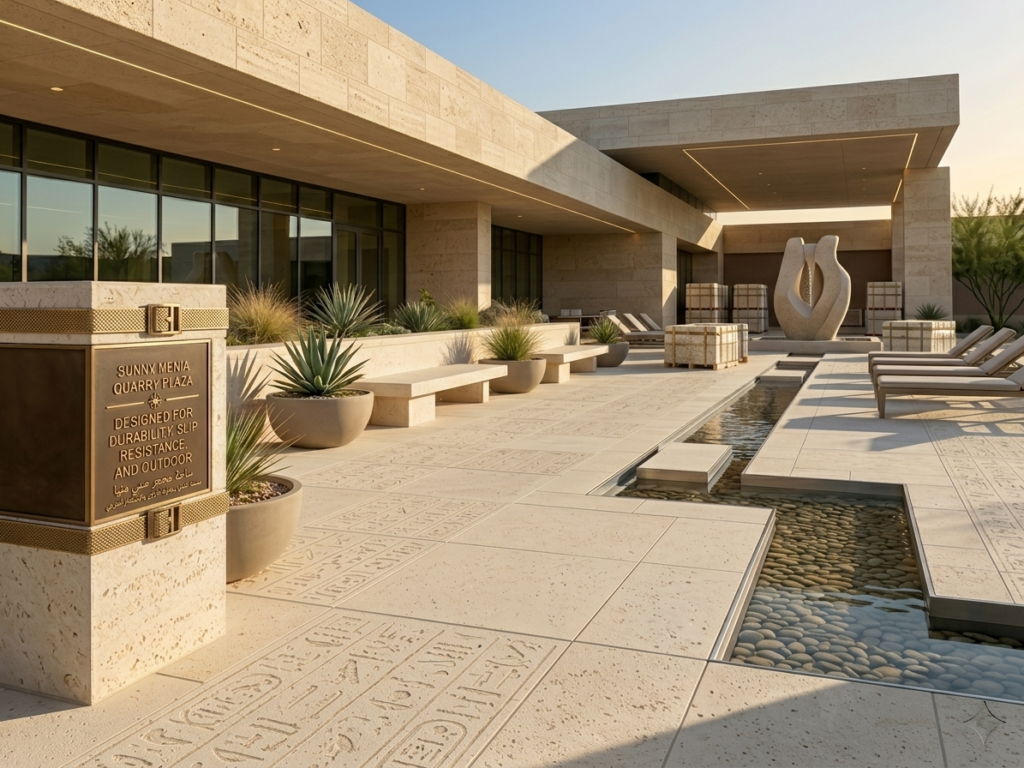
The antique/tumbled process simulates centuries of natural wear in hours. Cut tiles are loaded into rotating drums with water and abrasive media and tumbled until edges chip and round naturally, and the surface develops irregular micro-pitting. Each tile emerges unique — no two are identical. The result is a floor surface that feels genuinely old and characterful, completely at home in Mediterranean, Moorish, and classical architectural schemes. Travertine and limestone respond most beautifully. The installation character created by varied tiles and aged grout is impossible to replicate with any manufactured surface.
Performance Ratings
Process
Suitable Stones
Ideal Applications
Not recommended: Contemporary minimalist interiors, high-gloss commercial schemes
Raw Natural Texture
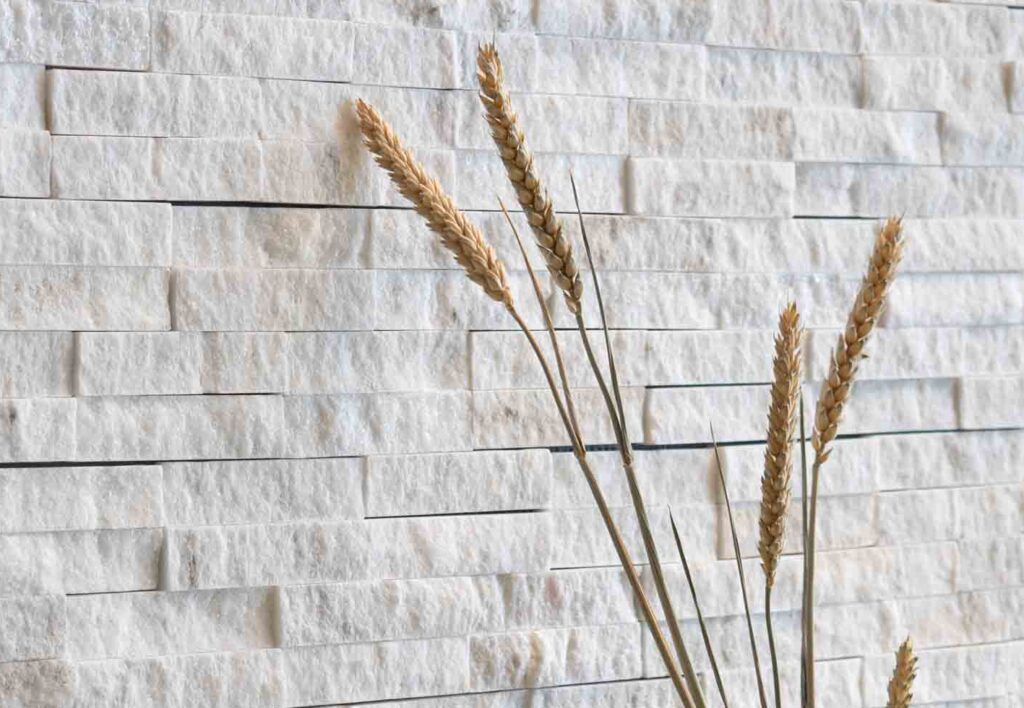
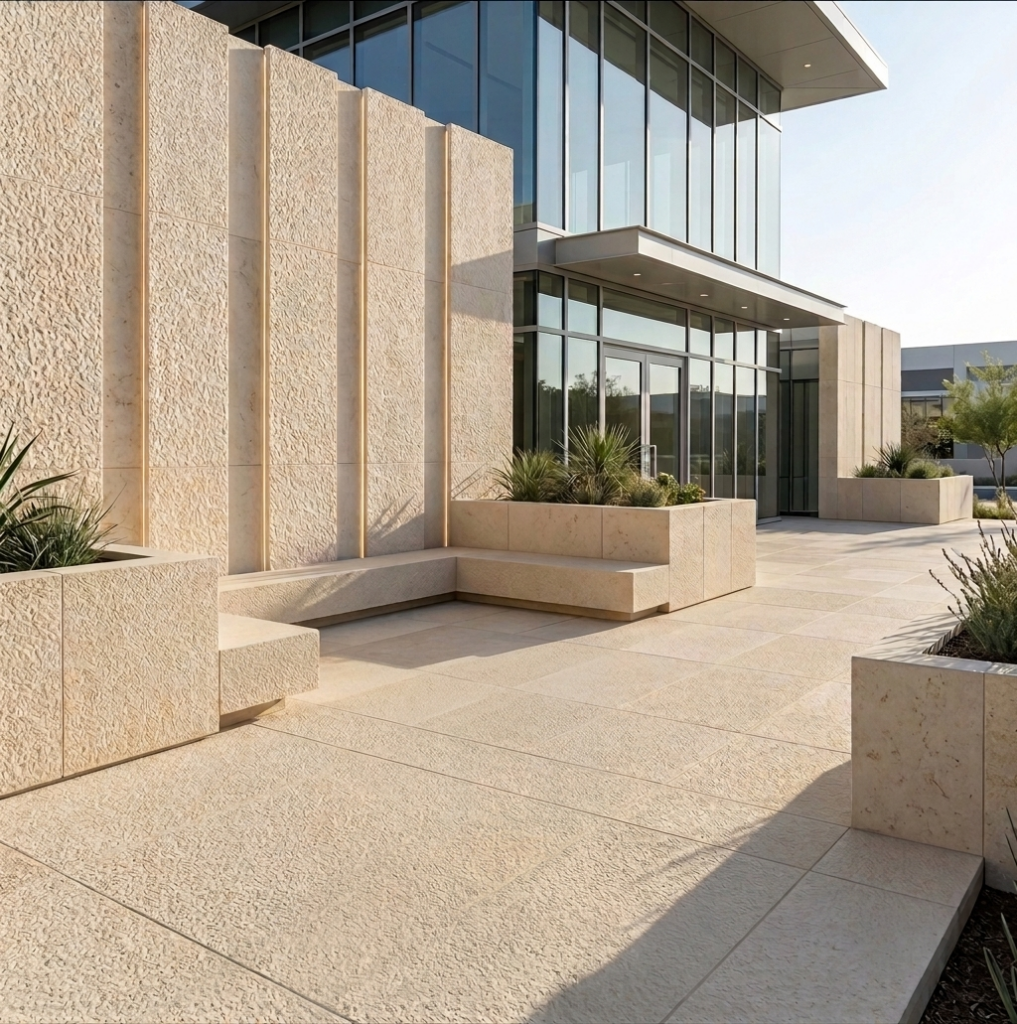
Split face is produced by cleaving the stone along its natural grain plane using mechanical splitting tools. The fracture exposes a raw, natural surface with three-dimensional relief and irregular texture that creates dramatic shadow lines on exterior walls. No two panels are identical. The process requires no grinding or polishing — the final surface is as the stone naturally separates, which means it retains the full mineral character of the quarry face. Split face cladding creates an unmistakably natural architectural character that smooth-surface stone cannot replicate.
Performance Ratings
Process
Suitable Stones
Ideal Applications
Not recommended: Interior floors, wall surfaces subject to moisture penetration
Thermal Texture
High-temperature oxy-gas flame is applied to the granite surface, causing rapid thermal expansion and spalling of surface mineral crystals. This creates a rough, irregular texture with dramatically high slip resistance — the standard specification for outdoor public granite paving where regulatory anti-slip compliance is mandatory. Note: the flaming process lightens stone colour as surface minerals oxidise under heat. Dark granites read as lighter grey-charcoal after flaming rather than deep black or red. This colour shift must be accounted for in specifications.
Performance Ratings
Process
Suitable Stones
Ideal Applications
Not recommended: Marble, Limestone, Travertine (thermal shock damages these materials — do not flame)
Side-by-Side
Choose the right finish for your project at a glance. All ratings are indicative — specific stone type affects individual results.
| Finish | Gloss Level | Slip Resistance | Slip Class | Maintenance | Best Environment | Lead Time |
|---|---|---|---|---|---|---|
| Polished | R9 | Medium | Indoor | 5–7 days | ||
| Honed | R9–R10 | Low | Indoor / Semi-Outdoor | 5–7 days | ||
| Sandblasted | R11 | Low | Outdoor | 3–5 days | ||
| Bush Hammered | R12 | Very Low | Heavy-Duty Outdoor | 5–7 days | ||
| Brushed | R10 | Low | Indoor / Covered Outdoor | 3–5 days | ||
| Antique / Tumbled | R10–R11 | Medium | Indoor / Covered Outdoor | 5–10 days | ||
| Split Face | N/A (wall cladding) | Very Low | Exterior Walls | 3–7 days | ||
| Flamed | R11 | Very Low | Heavy Outdoor | 3–5 days |